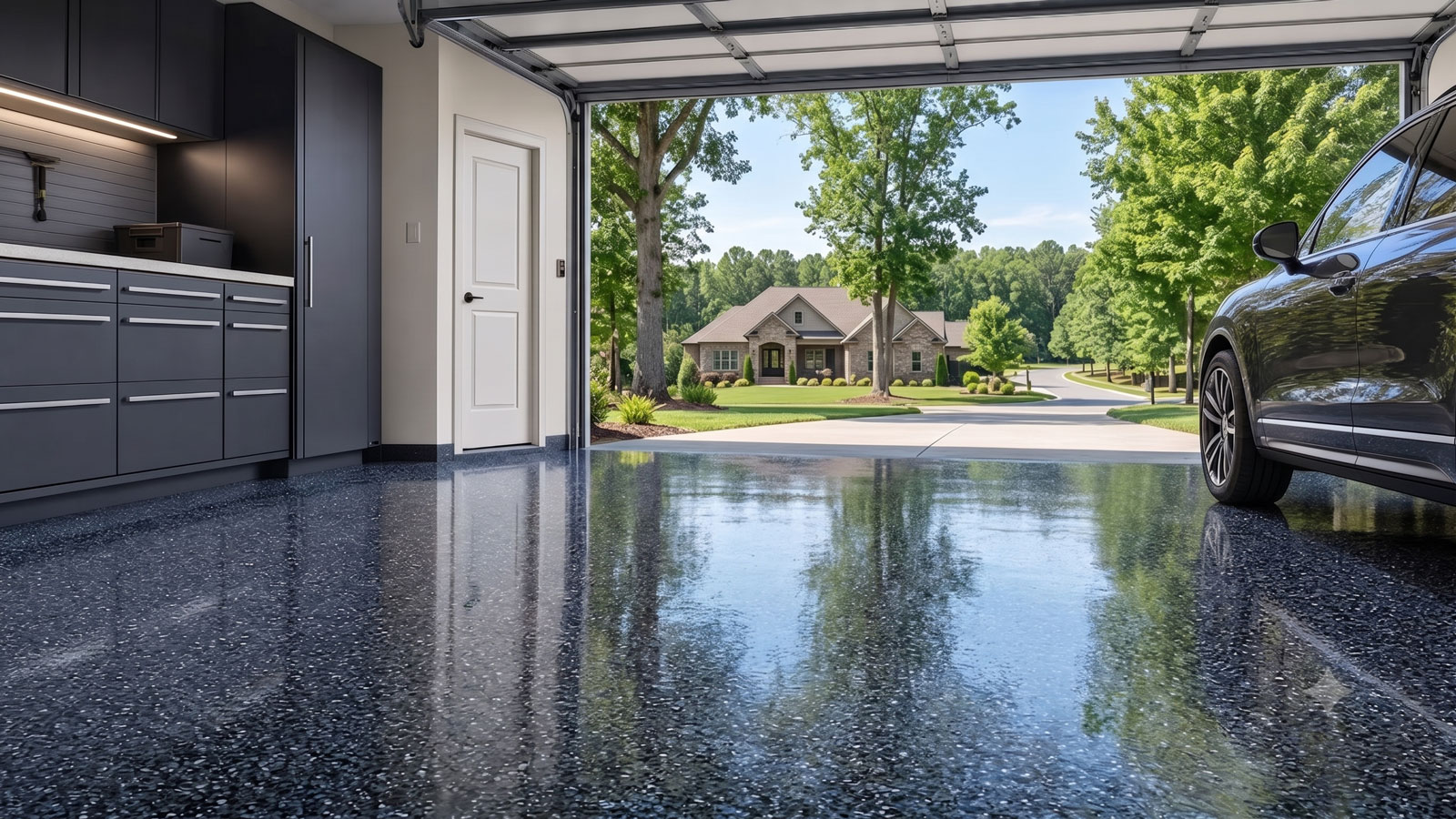
Garage Floor Coating in New Orleans, LA
Floor Coating Services in New Orleans, LA
New Orleans is a city whose flood-protection infrastructure shapes the way homeowners think about water, but it is important to separate city-scale drainage from the condition of one concrete floor. NOLA Ready describes the city's low relief and the fact that rainwater often must be pumped rather than simply draining away by gravity. The Sewerage & Water Board traces its drainage organization to the late 1890s and operates 24 major drainage pumping stations. Those facts explain why a low garage threshold deserves attention; they do not tell us whether any particular garage has flooded.
Built environments vary widely between long-established residential blocks, renovated houses, raised buildings and garages constructed much later than their homes. City floodplain guidance maintains elevation certificates and requirements for development, while its building rules treat ordinary private stormwater improvements separately from municipal pumping. Before considering epoxy or polyaspartic, inspect the actual slab for prior coatings, cracks, patchwork, contaminants and moisture. House age and neighborhood flood reputation are not substitutes for substrate testing.
For garages used daily in warm, humid weather, tracked water and dirt can make cleanability attractive. A compatible coating on sound mechanically prepared concrete may simplify routine cleanup, but it cannot prevent street flooding, reverse a driveway slope or serve as residential floodproofing. Ask for a clear estimate covering preparation, any drainage-related exclusions, finish texture and realistic time before vehicles return.
Local Market Insight
New Orleans' drainage network traces to an 1896 commission and now uses 24 drainage pumping stations. City floodplain and private stormwater rules operate at different scales; neither proves that a specific garage slab is damp or suitable for coating.
What Affects the Cost of Garage Floor Coating in New Orleans?
A New Orleans coating bid should price the particular concrete, not its place in a low-lying city. Older or renovated garages may need removal of paint and repairs, while newer concrete may contain treatments that prevent reliable bonding.
An accurate scope separates real water-entry problems from routine wet tires and interior cleaning. The installer should specify grading or drainage exclusions, moisture evaluation, grinding, repairs and the proposed full finish system.
- Existing paint and renovated slabs: An established house may contain a newer garage floor or repeated painted surfaces. Identify old films, weak patches and previous repair materials before estimating mechanical stripping and profiling.
- Threshold and runoff history: New Orleans' pumping infrastructure does not make a garage waterproof. Check driveway grade, waterlines and door seals at this address; correcting exterior runoff can require a separate project.
- Moisture within concrete: Distinguish water tracked in by cars from suspected moisture moving through the slab. Appropriate product-specific evaluation may affect material selection and installation timing.
- Movement, joints and repairs: Cracks, uneven sections and spalling should be assessed before resurfacing. Routine crack treatment differs from structural movement or water damage that needs a different specialist.
- Garage access and elevation: Raised structures, detached bays, steps and narrow approaches can change equipment staging, cleanup and edge work. Measure the actual area and obstacles rather than relying on typical garage dimensions.
- Topcoat and daily use: Heat, sunlight through an open door, tracked mud and regular parking influence the finish's texture and cleaning. Flake coverage, compatible topcoat and cure-time requirements are part of the full cost.
Call for a clear, project-specific estimate — or request one online.
New Orleans' Pumped Drainage and a Private Garage Floor
NOLA Ready identifies low natural relief and dependence on a network of pumping stations as defining drainage conditions across New Orleans. The Sewerage & Water Board explains that the city's drainage commission began in 1896, combining with the water board in 1903, and reports 24 drainage pumping stations and approximately 90 miles each of open and underground canals. Those figures show why rainwater management has long been a central public-works challenge. They do not provide a moisture reading or flooding history for a specific house.
Property drainage questions are more localized. If a garage floor becomes wet, determine whether street water reached the property, a driveway slopes toward the door, roof drainage discharges nearby, or moisture appears from the slab itself. City elevation certificates and floodplain guidance may inform the owner's wider risk decisions, but a coating contractor still needs to inspect the particular concrete and entrance conditions.
A decorative coating cannot stop a street from flooding and should not be presented as residential floodproofing. The city's own guidance discusses flood protection in terms of elevation, barriers and other measures, not a typical garage epoxy finish. If the property has active water entry, correct the cause with appropriate professionals before deciding whether the concrete is ready to coat.
Where the only wetness is ordinary tracked-in rain, a properly installed, suitably textured surface may make cleaning easier. The homeowner should ask the installer to distinguish routine use from drainage remediation and document all assumptions in the quote.
Renovated Buildings, Surface History and Coating Selection
New Orleans has a wide mix of residential construction periods and buildings modified over time. A house's date or location within a historic neighborhood does not prove the age of its concrete garage. A detached bay can be a later addition; a modernized garage can retain old paint, sealers, adhesive or oil contamination beneath its apparent finish.
Inspect the floor before covering it. Test old material for compatibility, note patched cracks, check whether deterioration continues at joints, and investigate any unusual damp areas. Proper mechanical surface profiling is not a cosmetic optional extra; it helps establish the conditions the selected product requires for adhesion.
Hot and humid weather can influence installation conditions, but neither humidity nor the word polyaspartic establishes a universal solution. Ask about concrete temperature, moisture limitations, UV exposure near the doorway and manufacturer cure instructions. A quick return-to-use claim is meaningful only after the actual repair and preparation work is included.
Homeowners should compare complete scopes: clearing belongings, old-coating removal, grinding, crack treatment, layer specification, texture, edges, cleanup and reopening the garage. Those details explain differences between bids better than a single material name or square-foot price.
Frequently Asked Questions
Does living below sea level mean I cannot coat my New Orleans garage?
No. Citywide elevation and pumped drainage are public conditions, not a test of a particular slab. Inspect actual water entry, moisture suitability and concrete soundness before choosing a finish.
Will epoxy protect a garage from street flooding?
No. A decorative floor finish cannot floodproof a home or stop stormwater crossing a threshold. Flood and drainage protection need separate planning and appropriate professional advice.
Is a renovated New Orleans garage automatically ready for polyaspartic?
No. A remodeled space can retain old sealer, paint or repairs. Verify the concrete and required mechanical preparation before assuming any coating will bond reliably.
How should I handle water brought in by cars?
Discuss texture, cleaning and the selected topcoat. A sound coated surface may be easier to wash than bare porous concrete, but dirt and water still require routine removal.
What belongs in a reliable garage-floor estimate?
Look for slab inspection, coating removal, grinding, crack work, moisture checks when relevant, system layers, texture, cure time and clear exclusions for drainage or structural repairs.
New Orleans Neighborhoods & Local Context
Typical Project Cost
$3,000-$5,500
Typical two-car garage range. Public planning range: $6-$12 per sq ft. Final pricing depends on floor size, concrete condition, prep work, coating type, and finish options.
Helpful Guides
Other Service Areas